
A common problem with live sports betting is that short descriptions leave out the conditions that actually affect a user. Clear information should explain what a feature does, how its limits work and how to identify uncertainty. Here, the emphasis is on changing prices, suspended markets JM8 Malaysia, stream delay and impulsive decisions, with special attention to a sequence of checks and interpretation steps. Nothing in the discussion suggests that betting produces reliable income or that losses can be predicted away.
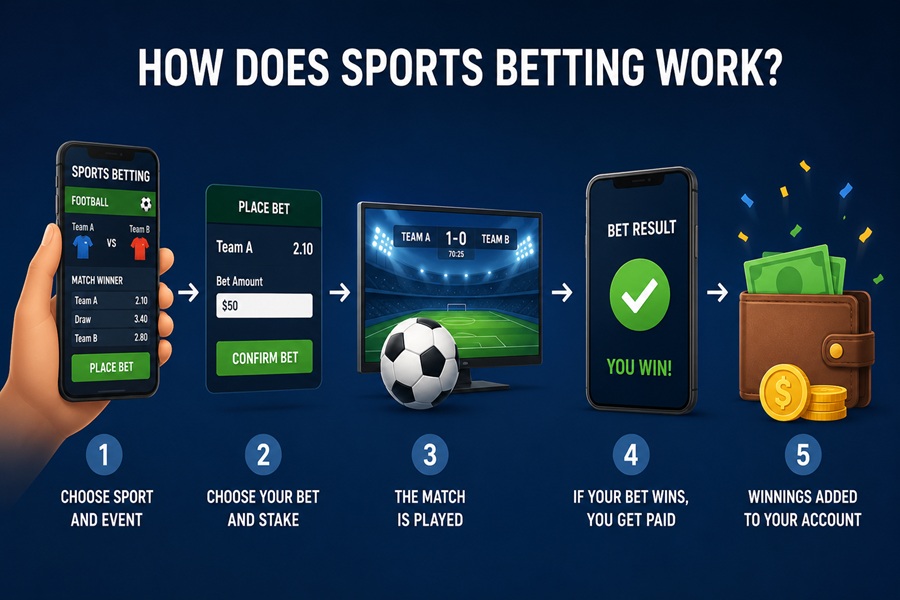
Why Live Sports Betting Needs a Clear Explanation
The starting point for a reader wanting an orderly learning path is to establish what live sports betting actually refers to. In this context, the important subjects are changing prices JM8 casino, suspended markets, stream delay and impulsive decisions. The discussion is most useful when it separates a written rule from an opinion, an estimate or a marketing statement.
Use independent sources to check basic claims, protect your devices and do not share login credentials or one-time codes. Set a firm spending limit in advance and avoid borrowing, chasing losses or using money assigned to essentials. Where self-exclusion or time controls are available, understand how they work before a problem arises. Stop when the predetermined limit is reached.
The underlying issue is cash-out availability and market pauses. This is worth addressing separately from entertainment preferences or interface quality. Confidence should come from understandable evidence and personal safeguards, not from a short winning anecdote or a persuasive testimonial.
If a decision involves a substantial amount of money, slowing down has value. Revisit the terms after a break and ask whether the same choice would make sense without time pressure, an expiring promotion or a memorable past result. That question often reveals motivations hidden by urgency.
Key Rules Behind Live Sports Betting
Rules shape the experience more than a headline does. For live sports betting, inspect changing prices, suspended markets, stream delay and impulsive decisions. Do not assume that conventions are identical across websites, jurisdictions or products; read the relevant version of the terms.
An unclear ownership trail, contradictory terms, requests for unusual payments or pressure to act immediately are reasons to pause. The absence of clear recourse for disputes is another warning sign. You do not have to resolve every uncertainty by registering or depositing. Choosing not to proceed can be the most sensible result of a comparison.
One practical approach is using a preset plan and avoiding hurried reactions. It turns an abstract promise into a concrete question: what would a user actually experience under the published rules? Keep assumptions visible so a change in policy or circumstances does not silently change the conclusion.
A question worth checking
Ask whether the source explains live pricing clearly and shows what happens when the standard case does not apply. When the answer is uncertain, write down what additional evidence would be required. An unsupported assumption should not be treated as a policy guarantee.
Consider a hypothetical reader who notices an appealing headline and then discovers a qualification in the full policy. The sensible response is to calculate how that qualification changes the decision, not to assume it will never apply. Keep an explicit note of any conditions that cannot be verified before taking action.

How to Evaluate Live Sports Betting in Practice
Turn the topic into a repeatable review process by using a preset plan and avoiding hurried reactions. For live sports betting, make notes as you research so that a later comparison relies on a consistent set of questions rather than first impressions.
Definitions matter because two offers with similar names can have substantially different rules. Before comparing numbers, record what the provider actually means by the relevant terms. Pay attention to effective dates, eligibility, exceptions and whether the explanation appears in a formal policy or only on a promotional graphic. A screenshot is useful for reference, but the live terms can change.
When reading the fine print, pay special attention to changing prices, suspended markets, stream delay and impulsive decisions. Look for definitions, eligibility, and situations in which the ordinary process does not apply. If the material is contradictory or unclear, seek clarification in writing and avoid committing funds in the meantime.
A checklist works best when it has a clear stop rule. For example, the reader can decide in advance not to proceed if identity, payment, age eligibility or the dispute process remains unclear. This prevents a polished interface or temporary offer from outweighing the original safeguards.
Mistakes and Limitations Worth Knowing
One mistake is assuming that broadcast delay may mean the quoted market has already changed. Treat exceptions, missing information and downside scenarios as central considerations. These are not minor details when cash-out availability and market pauses may be affected.
Look beyond the main landing page. Supporting pages may clarify verification, account restrictions, settlement rules, processing windows or dispute procedures. If an important rule is absent, treat the omission as an unanswered question rather than an invitation to guess. Terms written in plain language are easier to assess, but clarity is not the same as fairness.
The underlying issue is cash-out availability and market pauses. This is worth addressing separately from entertainment preferences or interface quality. Confidence should come from understandable evidence and personal safeguards, not from a short winning anecdote or a persuasive testimonial.
A question worth checking
Ask whether the source explains live pricing clearly and shows what happens when the standard case does not apply. When the answer is uncertain, write down what additional evidence would be required. An unsupported assumption should not be treated as a policy guarantee.
Search rankings, forum posts and promotional reviews can be starting points, but they are not substitutes for first-party terms and independent corroboration. Check dates, distinguish editorial information from advertising and be wary of sweeping claims without supporting details.
A Sensible Checklist for Live Sports Betting
A practical checklist for live sports betting should cover published conditions, user controls, time limits and red flags. Start with live pricing, then work outward to account safety and whether the service is legal and age-appropriate in your location.
A side-by-side assessment works only when the same assumptions apply to each option. Note relevant minimums, maximums, time periods, exceptions and available safeguards. Avoid ranking services solely by a prominent headline figure. Sometimes the option with less aggressive marketing is easier to understand, and sometimes none offers enough information to justify proceeding.
One practical approach is using a preset plan and avoiding hurried reactions. It turns an abstract promise into a concrete question: what would a user actually experience under the published rules? Keep assumptions visible so a change in policy or circumstances does not silently change the conclusion.
It also helps to separate user experience from mathematical expectation. A platform may load quickly and still have rules that are hard to understand; a simple interface does not change the probabilities of a random game. Assess each dimension on its own evidence.
Conclusion
The most useful way to understand live sports betting is to evaluate changing prices, suspended markets, stream delay and impulsive decisions rather than rely on promotional claims. Keep a sequence of checks and interpretation steps in mind, verify important rules from current sources and treat cash-out availability and market pauses as a real consideration. If the details remain unclear, there is no need to proceed. Gambling should never be approached as an income strategy, and users should follow the laws and age limits that apply where they live.
